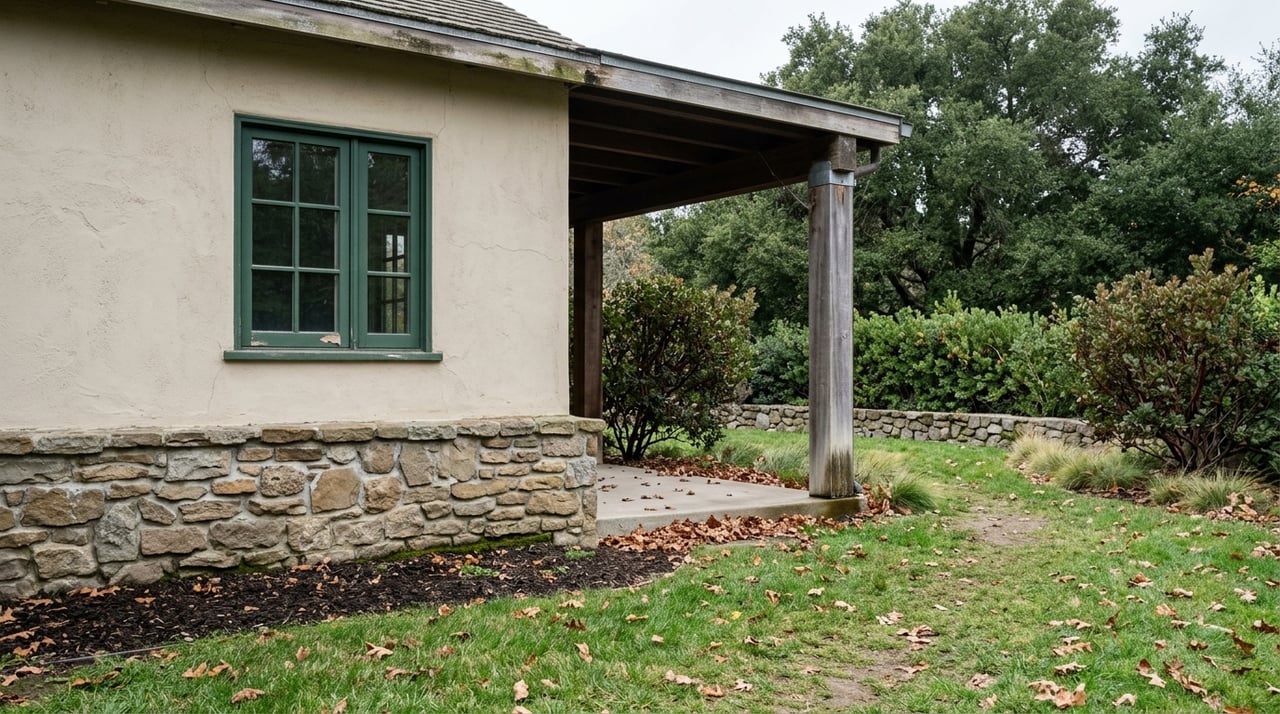
What It Really Costs to Sell an Inherited House in Hollister
August 27, 2026
August 27, 2026
You get the call, and a few weeks later you're standing in a house that used to belong to someone you loved, holding a stack of court paperwork you didn't ask for. Somewhere between the funeral and the first attorney meeting, someone mentions "probate," and you start Googling how long this is going to take.
That's the wrong question. The number that actually changes what lands in your pocket isn't the timeline. It's a fee schedule buried in the California Probate Code that gets applied to the full sale price of the house, not what you actually inherit after the mortgage is paid off. On a typical Hollister home, that schedule can quietly take $36,000 off the top before a single dollar reaches the heirs.
Here's how the process actually runs in San Benito County, and where that number comes from.
Every probate case tied to a Hollister property moves through the San Benito County Superior Court's probate division at 450 4th Street. The clerk's office keeps standard weekday hours, but probate has its own rhythm: tentative rulings for probate, adoption, and CARE cases are posted by 3 p.m. on Fridays. If you're waiting on a judge's decision about your petition, Friday afternoon is when you'll know, not before.
Not every estate needs a personal representative appointed by a family member. When there's no one able or willing to step in, San Benito County's Public Administrator can take on the role, and that office sells estate real property by listing it with a licensed broker after publishing the required legal notices. Those sales go through "as is," with no repairs and no guarantees about condition, the same standard that applies to most probate sales handled privately.
The single biggest fork in the road for a Hollister probate sale is whether the personal representative was granted Full or Limited Authority under California's Independent Administration of Estates Act. Most wills written today authorize independent administration, but the court still has to grant it when Letters Testamentary are issued, and an heir can object.
| Full Authority | Limited Authority | |
|---|---|---|
| Court confirmation hearing required | No | Yes |
| Notice to heirs | 15-day Notice of Proposed Action | Notice plus published newspaper notice |
| Minimum sale price rule | No 90%-of-appraisal requirement | Must be at least 90% of the Probate Referee's appraised value |
| Typical time from accepted offer to close | Roughly 45 to 60 days | Roughly 90 to 150 days |
| Can the sale be overbid in court | No | Yes |
If you have Full Authority, you send the 15-day notice, and if nobody objects, you close like any other sale. If you have Limited Authority, or if an heir formally objects to the notice, the sale gets published in a local newspaper and heads to a confirmation hearing, where anyone can show up and try to outbid your accepted offer.
A confirmation hearing is a public auction with a judge presiding. The minimum new sale price is set by a formula written into the Probate Code: 10 percent of the first $10,000 of the accepted offer, plus 5 percent of everything above that, added back to the original offer.
Run that formula against a Hollister-scale number. Say the accepted offer on a house is $700,000. Ten percent of the first $10,000 is $1,000. Five percent of the remaining $690,000 is $34,500. Add those to the original offer and the new minimum overbid price becomes $735,500. Anyone who wants to overbid at the hearing has to show up with a cashier's check, no personal checks accepted, for at least 10 percent of that new minimum, which works out to $73,550 just to raise a paddle.
That's not a hypothetical inconvenience. Experienced probate attorneys note that a small circle of regular overbidders show up at these hearings specifically because they know the process and the numbers. If your Hollister property has Limited Authority and heads to confirmation, expect the buyer pool to include people who do this professionally, not just first-time buyers who found the listing online.
Here's a detail that trips people up in both directions. California's Transfer Disclosure Statement, the form that requires sellers to check boxes about roof leaks, foundation issues, and permit problems, does not apply to probate sales. Civil Code Section 1102.2 exempts transfers made under court order, probate included, because a personal representative usually never lived in the house and has no firsthand knowledge of its condition.
That exemption does not erase every disclosure duty. A personal representative selling a Hollister property still has to:
If you skip the TDS but know about a cracked foundation or a bad roof and say nothing, you can still face liability. The exemption removes a form, not honesty.
This is the part that catches almost everyone off guard. California sets statutory compensation for both the estate's attorney and the personal representative on a graduated scale applied to the gross value of the estate: 4 percent of the first $100,000, 3 percent of the next $100,000, and 2 percent of the next $800,000.
That fee is calculated on the sale price of the house, not on what's left after the mortgage. A $750,000 home with $400,000 still owed generates the same statutory fee as one that's paid off free and clear.
Run the math on a $750,000 Hollister property, which sits comfortably inside the range the market has been showing through 2026. Four percent of the first $100,000 is $4,000. Three percent of the next $100,000 is $3,000. Two percent of the remaining $550,000 is $11,000. That totals $18,000, and it applies separately to the attorney and to the personal representative if both take the statutory fee, bringing the combined total to $36,000.
That figure sits on top of the Probate Referee's fee, set by statute at roughly 0.1 percent of the appraised value, which comes to about $750 on a $750,000 home. It doesn't include court filing fees, newspaper publication costs if the sale requires confirmation, or the real estate commission itself. None of those numbers show up when you're just thinking about "what the house is worth."
California law expects a personal representative to close the estate within one year of receiving Letters, or 18 months if a federal estate tax return is required, under Probate Code Section 12200. Miss that window and the representative has to file a status report explaining the delay. That deadline is part of why families often feel pressure to list sooner than they'd like, even while they're still sorting through a house full of someone else's belongings.
Do we need to fix anything before listing? No. Probate properties sell as is. Making repairs, or even painting over a stain, can unintentionally conceal something you're supposed to disclose. Clear out personal items, clean up the entry and yard, and let buyers do their own inspections.
Should we just use the agent who sold our own home years ago? You can use any licensed agent, but probate sales involve their own listing agreement, notice timing, and IAEA paperwork. An agent who has actually handled probate listings will know how to price around the Probate Referee's appraisal and how to keep a Full Authority sale from accidentally tripping into a confirmation hearing.
What happens if a sibling objects to the sale? An objection during the 15-day notice window can force the sale into court supervision even if the estate otherwise had Full Authority, which means the confirmation hearing and overbid process described above suddenly apply.
Does the $100,000 threshold for needing probate still hold? The county's own probate page still describes $100,000 as the line for requiring formal probate. Small-estate thresholds in California get adjusted over time, so if you're on the edge of that number, confirm the current figure with a probate attorney before assuming you're exempt.
If you're the one holding the paperwork right now, you don't need to become a probate expert overnight. You need someone local who has priced Hollister homes against a Probate Referee's appraisal before and knows exactly which forms and timelines apply to your situation. Kimberly Macias works with executors and personal representatives across San Benito County on exactly this kind of sale. Get your free home valuation to see what the property is actually worth before the fee math and the court calendar start making decisions for you.

Get assistance in determining current property value, crafting a competitive offer, writing and negotiating a contract, and much more. Contact me today.