Two Hollister Lots, Similar Size, Very Different ADU Costs
September 10, 2026
September 10, 2026
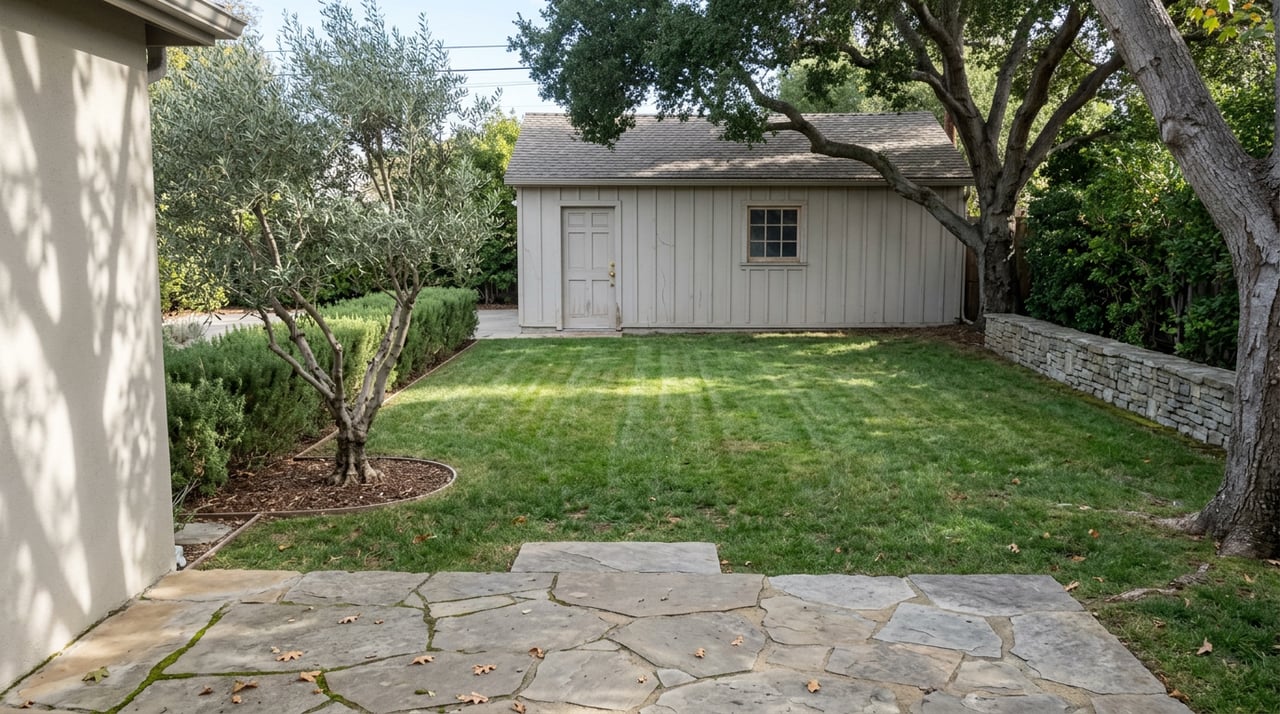
Picture two Hollister listings going up in the same week. Both mention "ADU potential" in the description. Both sit on similarly sized lots zoned for single-family homes. One seller's buyer can pull a permit off a free set of state-approved plans and break ground within a few months. The other buyer's contractor stops at the counter, because the city can't open the file until a licensed geologist signs off on the ground underneath the proposed unit.
Nothing about the yard explains the difference. The gap comes from two lines that never show up in a listing photo: which government actually reviews the permit, and whether the parcel sits inside a mapped earthquake fault zone. Both of those lines run straight through Hollister, and neither one is visible until someone checks.
Hollister's own accessory dwelling unit page carries a warning most buyers never think to look for. Some parts of the city fall inside the Calaveras Fault zone, and if a property sits inside that zone, the ability to build an ADU there can be directly affected. The mechanism is the Alquist-Priolo Earthquake Fault Zoning Act, which exists to keep construction away from active fault rupture. For ADUs specifically, the city notes that projects converting an existing garage or detached structure, or units proposed on larger multifamily properties, may require a seismic analysis from a licensed geologist before the city clears the site for construction at all.
That single requirement changes the math for a whole category of Hollister lots. A garage conversion that would otherwise cost a homeowner a permit fee and a few months of construction can instead require a geotechnical study before anyone touches a wall. Two houses on the same block, one inside the fault zone and one just outside it, can face completely different timelines and completely different budgets for what looks on paper like an identical project. The city points residents to the California Department of Conservation's fault zone maps to check a specific parcel, and that check belongs at the top of anyone's ADU planning list, not somewhere after the design is already drawn.
The second invisible line is jurisdictional. San Benito County is not one ADU rulebook. It is three. The City of Hollister, the City of San Juan Bautista, and unincorporated San Benito County each run their own review process, and the rules differ between them.
The detail that catches people off guard involves the state's free pre-approved ADU plans, the ones designed to let a homeowner skip paying an architect for a custom design. Those plans are not automatically accepted in Hollister or in San Juan Bautista. Both cities maintain their own review process and can layer on additional local standards on top of whatever the state list allows. A homeowner who assumes the state plan set will work everywhere in the county can find out otherwise only after submitting.
| Jurisdiction | Reviews ADU permits | Accepts state's free pre-approved plans automatically |
|---|---|---|
| City of Hollister | Hollister Development Services | No |
| City of San Juan Bautista | San Juan Bautista planning department | No |
| Unincorporated San Benito County | County planning department | Not restricted by this rule |
Before anyone budgets for an ADU, the first move is confirming which of the three governments actually has jurisdiction over the parcel. The county assessor's parcel maps settle that question, and it is worth settling before a design gets drawn, not after.
Once a lot clears both filters, fault zone and jurisdiction, Hollister's zoning code lays out a specific set of rules that shape what actually gets built. A single-family lot is allowed one attached ADU or one detached ADU, and that unit can be combined with a junior ADU under a separate section of the code. The ADU can go inside a converted detached garage. It needs its own separate entrance from the main house, and if it sits above a second story, any exterior stairway serving it can't be visible from the street.
The code also caps how much of the front setback area can turn into hardscape at 50 percent, excludes the driveway from that cap, and limits driveway width to 20 feet for a double garage or 30 feet for a three-car garage. Two rules matter most for anyone thinking about long-term rental income: the ADU cannot be sold or conveyed separately from the main house, and it cannot be rented for terms of 30 days or less. Before a building permit gets issued, the owner has to record a deed restriction in the city's prescribed form, and the application package itself requires a preliminary title report dated within six months of submittal. None of this is unusual by California standards, but it is the kind of paperwork sequence that trips up a first-time ADU builder who expected the process to end at the design phase.
Here is a detail worth reading twice. The Hollister municipal code, as codified, states that owner-occupancy is not required as a condition of permit approval for ADUs permitted between January 1, 2020 and January 1, 2025. That window has already closed. The fact that the local code text is still anchored to a 2020-to-2025 window is exactly the kind of thing a buyer or seller should confirm directly with Hollister's Development Services rather than assume from the code as published. Municipal code language does not always get refreshed the moment state law shifts again, and this is a case where the safest move is a phone call before a permit application, not a read of the ordinance alone.
Assuming a lot clears the fault check, the jurisdiction is confirmed, and the code requirements are accounted for, the reason people go through this process is rental income. ADUs in communities like Hollister typically rent in the range of $1,500 to $2,800 a month, depending on size and finish. California law requires cities to act on a complete ADU application within 60 days, which gives a homeowner a real deadline to hold the city to once the paperwork is in. Smaller units under 750 square feet are exempt from impact fees, which narrows the gap between a small studio ADU and a larger unit once total project cost gets compared against expected rent.
None of those numbers matter if the fault zone check or the jurisdiction check gets skipped first. They are the payoff at the end of the process, not the starting point.
Sellers who want to market a lot's ADU potential, and buyers who are counting on it to pencil out a purchase, both benefit from working through the same short list before a number gets attached to the idea:
Does the Calaveras Fault run through all of Hollister? No. It affects some parts of the city, not the whole footprint. The California Department of Conservation's fault zone maps show exactly which parcels fall inside the mapped zone.
Can I still build an ADU if my lot is in the fault zone? Sometimes, but certain projects, particularly conversions of an existing garage or detached structure, may need a seismic analysis from a licensed geologist before the city will clear the site for construction.
Do I need to disclose ADU permit status when selling a Hollister home with an unpermitted unit? This is a question for your real estate attorney or agent to walk through case by case, since disclosure obligations depend on the specifics of the structure and how it was built.
Two backyards, same square footage, can still land in completely different places once these lines get drawn. If you're weighing whether a Hollister property's ADU potential is real or just a phrase in a listing description, Kimberly Macias can help you check the jurisdiction, the fault map, and the code before you commit a dollar to the idea. Get your free home valuation and let's talk through what your specific lot can actually support.
This article is general information, not legal, tax or financial advice. Consult a qualified professional about your situation.
Get assistance in determining current property value, crafting a competitive offer, writing and negotiating a contract, and much more. Contact me today.