In Salinas, a Rental's Build Date Now Sets Its Rent Ceiling
November 12, 2026
November 12, 2026
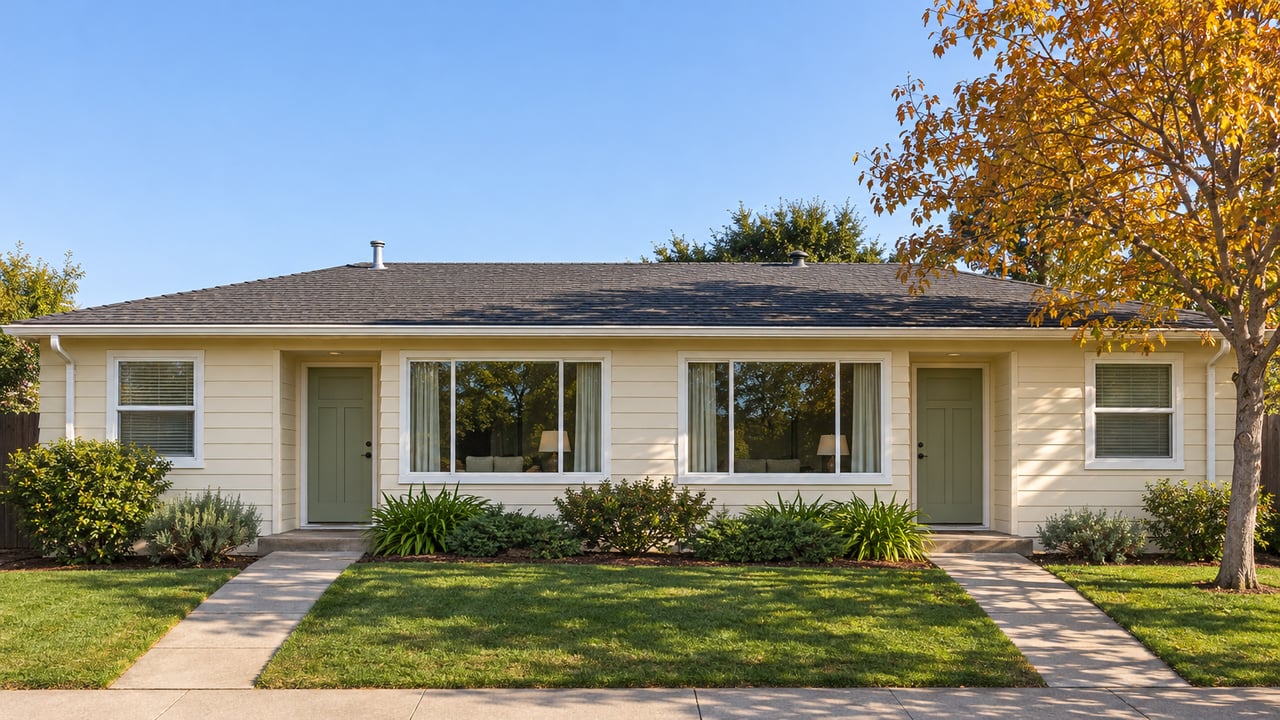
Picture two duplexes listed in Salinas at about the same price, with the same bedroom count and similar rents. Can the same investor expect the same income from each one over the next five years? After the Nov. 3 election, the answer often turns on a date most listing sheets put in small print: whether the building went up before or after February 1, 1995.
Salinas voters kept the city's rent stabilization ordinance and the three tenant laws that came with it. If you're weighing a Salinas rental for a 1031 exchange, a first investment, or a duplex you plan to live in and rent half of, the vote changes how you should read every listing's year-built field.
Measure H would have repealed four rental ordinances. The City Council adopted the rental registration ordinance separately and the three tenant ordinances on September 24, 2024, and the city says the package took effect January 1, 2025. The four are Rental Registration (Ordinance 2663), Rent Stabilization (2681), Tenant Protection and Just Cause Eviction (2682), and Tenant Anti-Harassment (2683). A new council majority voted to repeal all four on June 3, 2025. A referendum petition filed July 3, 2025 suspended that repeal and kept the ordinances in effect while the question went to voters.
On election night, The Salinas Californian reported that Measure H was failing 59.1% to 40.9%. The County of Monterey's semi-final report, published November 7, widened that to 15,575 "no" votes, or 60.77%. Those are unofficial counts until the county certifies the election. Either way, the margin leaves the rules a buyer underwrote against in 2025 in place for the foreseeable future.
The city's rent stabilization FAQ puts the coverage rule plainly. In general, the local cap covers rental properties with two or more homes on one parcel that were built before February 1, 1995. Single-family homes, condominiums, and newer multifamily homes are generally exempt. The city also says a "multi-family dwelling" can be a duplex, a triplex, an apartment building, or several livable structures on one parcel. That definition matters for older Salinas lots with a second house in back.
For homes outside the city cap, the city FAQ says California's Tenant Protection Act, AB 1482, may still limit increases with different numbers, though some homes are exempt from the state law too.
| Property type in Salinas | Which rent cap applies | Annual registry fee, 2026 |
|---|---|---|
| Duplex, triplex or larger, built before Feb. 1, 1995 | City rent stabilization, the lesser of 2.75% or 75% of West CPI-U | $112 per unit |
| Duplex, triplex or larger, built after Feb. 1, 1995 | State AB 1482, unless exempt | $29 per unit |
| Single-family home or condo | State AB 1482, unless exempt | $29 per unit |
The Costa-Hawkins Act explains why the line sits where it does. That state law limits which homes a city can put under local rent limits, and Salinas wrote its ordinance to exempt whatever Costa-Hawkins exempts. The city didn't choose the 1995 cutoff for local reasons. Still, every Salinas listing now sorts into one category or the other.
Ordinance 2681 allows one increase per 12 months on a covered unit. The cap is the lesser of 2.75% or 75% of the most recent 12-month change in the Bureau of Labor Statistics CPI-U for the West urban region, not seasonally adjusted. The BLS reported West-region inflation of 3.4% for September 2026. Seventy-five percent of that is 2.55%, which is what the city's rent calculator showed in early November. The number moves as new CPI data comes out. The California Attorney General notes that local caps are recalculated monthly, and October's West CPI was scheduled for release on November 10. Check the city calculator on the day a notice goes out.
The state cap is much higher. For increases taking effect between August 1, 2026 and July 31, 2027, the Attorney General lists a maximum of 8.6% for counties outside the Los Angeles, Riverside, San Diego and San Francisco areas. Monterey County falls in that group.
Here's what that gap looks like in dollars. HUD's fiscal 2026 Fair Market Rent for a two-bedroom in the Salinas metro area is $2,684 a month. At that rent, the city's 2.55% cap allows about $68 more per month. The state's 8.6% ceiling allows up to about $231. Across one year on one unit, the difference in maximum allowable rent comes to roughly $1,950. What the market will bear may sit well below either cap. Apartment listings in Salinas had a median rent of $2,500 in August 2026, up 4% from $2,395 a year earlier, according to The Salinas Californian's report on Zumper data.
So in a year when market rents rose about 4%, the state cap rarely binds, while the city cap sits below what the market moved. A pre-1995 duplex can't fully follow even ordinary rent growth. A newer duplex down the street can.
The annual cap is only half the mechanism. The other half is what happens when a tenant leaves. The city's FAQ says Costa-Hawkins lets landlords set a new rent in some cases when a tenant moves out. The Attorney General describes the same reset under state law: when tenants move out and new ones move in, the landlord may set the initial rent.
On a covered building, then, the rent you inherit at closing grows slowly for as long as current tenants stay, and the gap to market can build up quietly. Price a pre-1995 duplex on the assumption that its rents catch up soon, and you're assuming both tenants leave soon. Under the city's just-cause ordinance, a landlord can't make that happen just by wanting it.
The build date decides the rent cap. It doesn't decide whether the other three ordinances apply. Those reach almost everything a buyer might purchase:
Two details matter most to buyers who plan to live on the property. The just-cause ordinance exempts some owner-occupied primary residences that rent out no more than two units or bedrooms, including an ADU or JADU. The ordinance's primary-residence indicators require ownership in the occupant's own name, not through an LLC or other entity. The way you take title can affect which rules apply to you.
The city says it will check a specific property if you ask, and it directs unit-specific questions about ADUs and owner-occupied duplexes to its staff. Before your offer price relies on a rent projection, get answers to these questions:
This post is general information, not legal, tax or financial advice. Confirm how these ordinances apply to a particular property with the City of Salinas and your own attorney or tax advisor, especially if a 1031 exchange timeline is involved.
Does Salinas rent stabilization apply to a single-family rental? Generally no. The city exempts single-family homes and condos from its local cap. State AB 1482 may still apply, and the registry and anti-harassment rules do.
Is the 2.55% figure fixed for the year? No. It's tied to the most recent West CPI-U reading and recalculated as new data is released.
Are the Measure H results final? The county's count published November 7 was labeled semi-final, with "no" at 60.77%.
If you're comparing a pre-1995 duplex with a newer one, or weighing a Salinas rental for a 1031 exchange, Kimberly Macias can pull the build dates, registration status and rent history on the properties you're considering before you write an offer. If you already own a Salinas rental and want to know how its coverage affects your sale price, start with a free home valuation.
Get assistance in determining current property value, crafting a competitive offer, writing and negotiating a contract, and much more. Contact me today.